
Summary
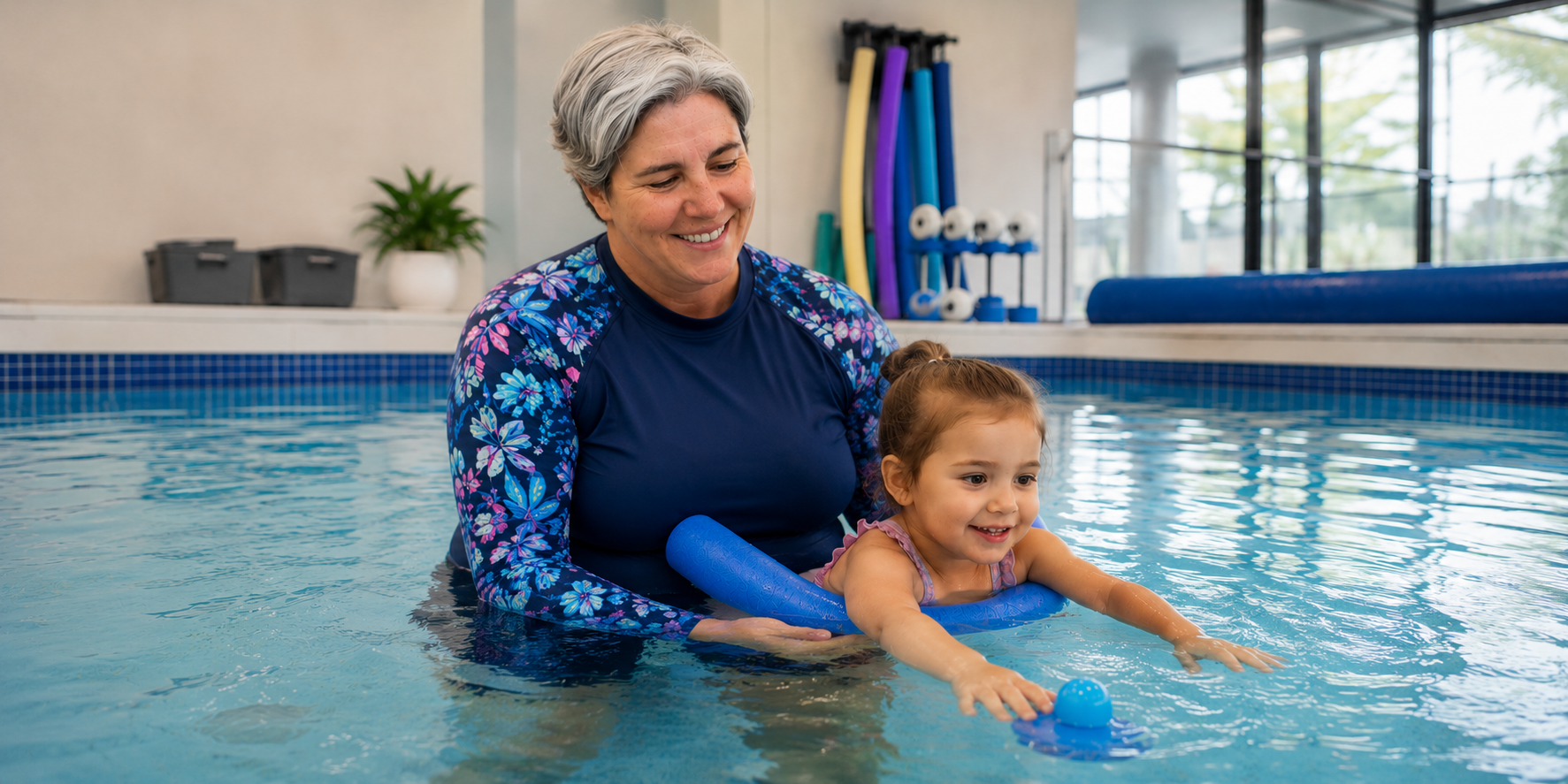
Water can be a fun, calming, and supportive environment for children with additional needs—but it also comes with important safety considerations. This article explores why water safety is especially important, the many benefits of swimming and aquatic therapy, and some of the common challenges families may face. It also provides practical tips to help you get started and feel more confident supporting your child in the water. With the right approach and support, every child can learn to feel safe, capable, and enjoy being in the water in their own way.
Why this Matters
Water can be a source of joy, freedom, and therapeutic benefit for children. For children with additional needs—including those with neurodevelopmental disorders, genetic or neurological conditions, and physical disabilities—swimming and aquatic therapy offer unique opportunities to support development, wellbeing, and safety.
However, these children may also face a higher risk around water. Understanding both the benefits of aquatic environments, as well as the challenges and safety considerations, can help families make informed decisions about introducing their child to swimming or aquatic therapy.
Why Water Safety Is So Important
Drowning is one of the leading causes of accidental death in children. For children with additional needs, the risk is significantly higher.
Children with physical disabilities, neurological conditions (such as epilepsy or cerebral palsy), or sensory processing challenges may face increased risks due to mobility limitations, reduced safety awareness, or differences in communication.
Learning water safety skills—such as safe entry and exit, floating, and understanding pool rules—is essential for all children, but especially for those with additional needs.
The Benefits of Swimming and Aquatic Therapy
Physical Benefits
Improved strength, coordination, and balance
Increased flexibility and range of motion
Reduced muscle tension and joint strain due to water buoyancy
Enhanced cardiovascular fitness and endurance
For many children, the water provides a supportive environment that allows for movement and exercise that may be difficult on land.
Sensory and Emotional Benefits
Calming effects of water pressure and movement
Support for sensory regulation and body awareness
Reduced anxiety and improved mood
Opportunities for relaxation and emotional expression
Children with sensory sensitivities often find the consistent pressure and temperature of water soothing, helping reduce overstimulation and support emotional regulation.
Cognitive and Developmental Benefits
Improved attention and focus
Support for motor planning and sequencing
Opportunities for learning through play and repetition
Development of water safety awareness and decision-making skills
Aquatic sessions can be tailored to support specific developmental goals in a playful and engaging way.
Social and Communication Benefits
Opportunities for interaction with peers and adults
Development of turn-taking, listening, and following instructions
Increased confidence and self-esteem through skill development
Inclusion in family and community activities
For many children, swimming becomes a favourite activity that supports both social connection and independence.
What This Might Look Like for Your Child
Starting in the water doesn’t have to mean jumping straight into swimming lessons. For many children, it begins gently and builds over time.
This might look like:
Sitting on the edge of the pool and splashing
Gradually getting comfortable entering the water with support
Practising floating with assistance
Playing simple games in the water
Slowly building confidence and tolerance
Every step counts, and small wins are important.
Progress Looks Different for Every Child
It’s important to remember that progress in the water can look different for every child.
For some children, the goal may be learning safety skills like floating or getting to the pool edge. For others, it might be building confidence, regulating emotions, or simply feeling comfortable being in the water.
There is no “right” pace—what matters most is that your child feels safe, supported, and able to engage in a way that works for them.
Challenges and Considerations
While the benefits are significant, it’s important to be aware of potential challenges:
Sensory sensitivities to noise, temperature, or touch
Communication differences that may affect understanding of instructions
Anxiety around new environments or transitions
Physical access needs (e.g. pool lifts, ramps, changing facilities)
Health considerations such as epilepsy, fatigue, or medical devices
With thoughtful planning and the right support, these challenges can be managed.
Creating a Supportive Aquatic Environment
A supportive environment can make a big difference in your child’s experience.
Helpful features may include:
Small group sizes or one-to-one support
Predictable routines and structure
Adapted equipment and teaching approaches
Warm, quieter pool environments
Instructors with experience supporting children with additional needs
When children feel safe and supported, they are more likely to enjoy the water and build confidence over time.
Practical Tips: Getting Ready for the Pool
A little preparation can help your child feel more comfortable and set things up for a positive experience:
Choose comfortable swimwear that suits your child’s sensory needs
Bring a towel and warm clothes for after the session
Pack snacks and water
Consider bringing a familiar toy or comfort item
Allow extra time so you don’t feel rushed
Getting Started
If you’re considering swimming or aquatic therapy for your child, it can help to:
Look for instructors with experience in inclusive aquatics
Visit the pool beforehand to explore the environment
Talk to your child’s healthcare team about any specific needs
Start slowly and build comfort and confidence over time
It’s completely normal to feel unsure or even a little anxious about starting—many families feel this way at first.
Helpful Resources for Families
If you’re looking for more support or want to explore swimming options in your local area, these resources can be a great place to start:
Finding Inclusive Swim Programs
Autism Swim A national organisation that provides training for swim teachers and a directory of providers who support children with autism and additional needs.
AUSTSWIM Offers a swim school finder and sets national standards for swim teacher training, including inclusion and water safety.
Local Swim Schools and Programs (North Melbourne Area)
Mill Park Leisure A local leisure centre offering learn-to-swim programs, with a focus on water safety and community access.
Nillumbik Leisure Centres Provides swimming programs including Swim and Survive, supporting water confidence and skill development.
JUMP! Swim Schools Mernda A smaller, warm pool environment that may suit children who benefit from quieter, more structured settings.
Yarra Swim School A long-standing local swim school offering lessons for all ages, with qualified instructors and experience supporting children with additional needs.
Inclusive Swim Offers one-on-one and small group sessions tailored for children with additional needs, including sensory-friendly programs.
Inclusion and Participation in Sport
Access for All Abilities A national initiative that supports inclusion in sport and recreation, helping families find accessible and welcoming programs.
Swimming Victoria Provides inclusive pathways and opportunities for children with disability to participate in swimming.
A gentle note for families
Every child is different, and not every program will be the right fit straight away. It’s okay to:
Ask questions
Try a few different environments
Take breaks when needed
Go at your child’s pace
Finding the right environment can make all the difference in helping your child feel safe, confident, and able to enjoy the water.
Final Thoughts
Swimming and aquatic therapy can be a powerful way to support your child’s development, wellbeing, and participation in everyday life.
With the right support, every child can learn to feel safe, confident, and happy in the water—in their own way.
Want to Learn More?
If you’d like to explore this topic in more detail, including the research behind these ideas, you can read the full article here.
Important note:
This information is general in nature and is not a substitute for individual assessment, diagnosis, or medical advice. Every child is unique. Families are encouraged to speak with their GP or relevant health professional to discuss their child’s specific needs.
References and Further Reading
Caputo, G., Ippolito, G., Mazzotta, M., Sentenza, L., Muzio, M. R., Salzano, S., & Conson, M. (2018). Effectiveness of a multisystem aquatic therapy for children with autism spectrum disorders. Journal of Autism and Developmental Disorders, 48(6), 1945–1956. https://doi.org/10.1007/s10803-017-3456-y
Franklin, R. C., Pearn, J. H., & Peden, A. E. (2017). Drowning fatalities in childhood: The role of pre-existing medical conditions. Archives of Disease in Childhood, 102(10), 888–893. https://doi.org/10.1136/archdischild-2016-312456
Guan, J., & Li, G. (2017a). Injury mortality in individuals with autism. American Journal of Public Health, 107(5), 791–793. https://doi.org/10.2105/AJPH.2017.303696
Kraft, E., & LeBlanc, R. (2018). Examining the perceived impacts of recreational swimming lessons for children with autism spectrum disorder. International Journal of Aquatic Research and Education, 10(4), Article 7. https://doi.org/10.25035/ijare.10.04.07
Lawson, L. M., D’Adamo, J., Campbell, K., Hermreck, B., Holz, S., Moxley, J., Nance, K., Nolla, M., & Travis, A. (2019). A qualitative investigation of swimming experiences of children with autism spectrum disorders and their families. Clinical Medicine Insights: Pediatrics, 13, 1–9. https://doi.org/10.1177/1179556519872214
Martin, C., & Dillenburger, K. (2019). Behavioural water safety and autism: A systematic review of interventions. Review Journal of Autism and Developmental Disorders, 6(4), 344–356. https://doi.org/10.1007/s40489-019-00166-x
Musiyenko, O. V., Chopyk, R. V., & Kizlo, N. B. (2020). Influence of swimming on sensory functioning, quality of life and behaviour of children with autism. Health, Sport, Rehabilitation, 6(3), 60–69. https://doi.org/10.34142/HSR.2020.06.03.07
Ogonowska-Słodownik, A., Jakobowicz, O., Alexander, L., Marinho-Buzelli, A. R., Devion, C., & Morgulec-Adamowicz, N. (2024). Aquatic therapy in children and adolescents with disabilities: A scoping review. Children, 11(11), 1404. https://doi.org/10.3390/children11111404
Pan, C.-Y. (2010). Effects of water exercise swimming programme on aquatic skills and social behaviours in children with autism spectrum disorders. Autism, 14(1), 9–28. https://doi.org/10.1177/1362361309339496
Peden, A. E., & Willcox-Pidgeon, S. (2020). Autism spectrum disorder and unintentional fatal drowning of children and adolescents in Australia: An epidemiological analysis. Archives of Disease in Childhood, 105(9), 869–874. https://doi.org/10.1136/archdischild-2019-318658
Roostaei, M., Baharlouei, H., Azadi, H., & Fragala-Pinkham, M. A. (2017). Effects of aquatic intervention on gross motor skills in children with cerebral palsy: A systematic review. Physical & Occupational Therapy in Paediatrics, 37(5), 496–515. https://doi.org/10.1080/01942638.2016.1266943
The key to making things happen isn’t waiting for the perfect moment; it’s starting with what you have, where you are. Big goals can feel overwhelming when viewed all at once, but momentum builds through small, consistent action. Whether you’re working toward a personal milestone or a professional dream, progress comes from showing up — not perfectly, but persistently. Action creates clarity, and over time, those steps forward add up to something real.
You don’t need to be fearless to reach your goals, you just need to be willing. Willing to try, willing to learn, and willing to believe that you’re capable of more than you know. The road may not always be smooth, but growth rarely is. What matters most is that you keep going, keep learning, and keep believing in the version of yourself you’re becoming.